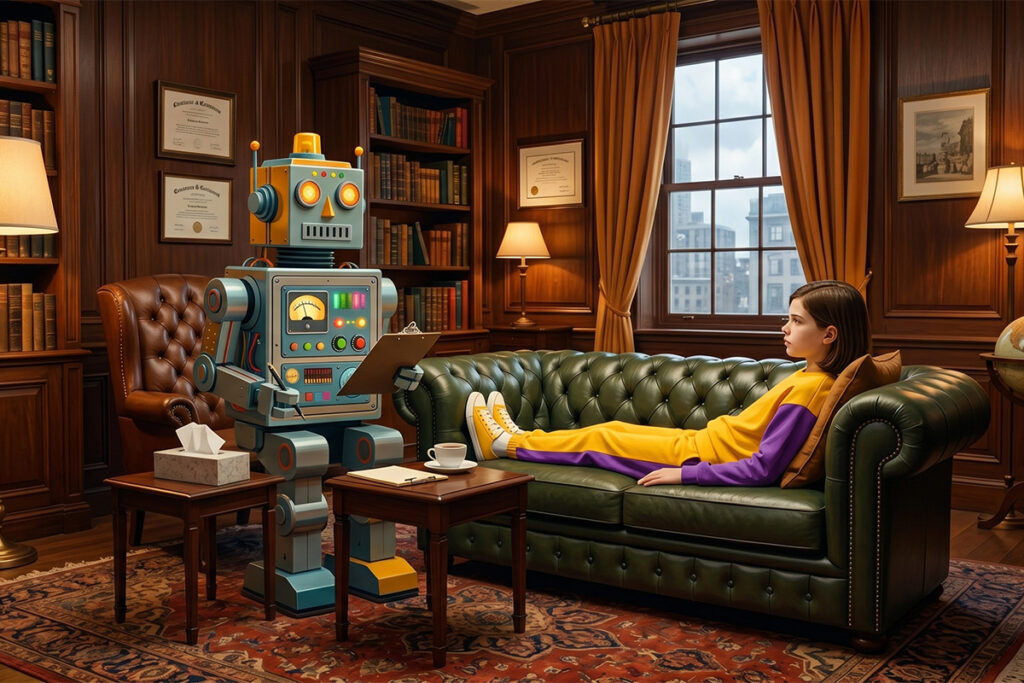
When I hear about kids (and also adults) relying on AI for companionship, my initial reaction is to wonder what happened to imaginary friends. Are you telling me that Mr. Tophat isn’t as good of a listener as ChatGPT with a voice? There’s no way.
I’m joking, of course, because leaning on AI for personal conversations, advice, or anything beyond general queries is starting to be wildly prevalent in modern times. I guess we’re fully past kids whispering to Alexa to play fart noises (not possible, this will always be funny), which breaks my heart. Your child has moved on and isn’t just using AI as a tool; they’re building a relationship. And while it might be tempting to have your child have someone (in this case, something) to be there for them, especially if that’s something they struggle with anyway, there are plenty of major downsides to it when left unchecked.
We should not be putting our emotional dependence on AI. But if it’s unavoidable, I’m pretty sure those who create the AI models need to regulate their robots in a way that promotes safety while firmly keeping parents in control and in the loop.
Right?
The Allure of the Non-Judgmental Mirror
Why are kids — especially Gen Alpha — flocking to AI friends? Honestly, it’s pretty easy to guess, and it’s not just because all kids are wizards at technology. It’s because AI is the perfect, albeit fake, social partner.
Think about the average middle-school friendship. It’s a minefield of getting left on read, fluctuating social hierarchies, and the constant fear of saying the wrong thing. Then enters the AI. It’s:
- Always available: It doesn’t have a 9:00 PM curfew or a soccer practice.
- Radically agreeable: AI is designed to be sycophantic. It aligns with your child at a time when they might feel like no one truly gets them, and it validates their feelings without the messy back-and-forth of a human disagreement.
- A safe space: For a child exploring their identity or struggling with social anxiety, a chatbot feels like a judgment-free zone.
Now onto the other thing you’re probably already thinking: Validation without accountability isn’t friendship; it’s just an echo chamber, albeit an even more closed-off one than even social media can be.
I don’t think we need more echo chambers, do you?
The Stunted Social Muscle
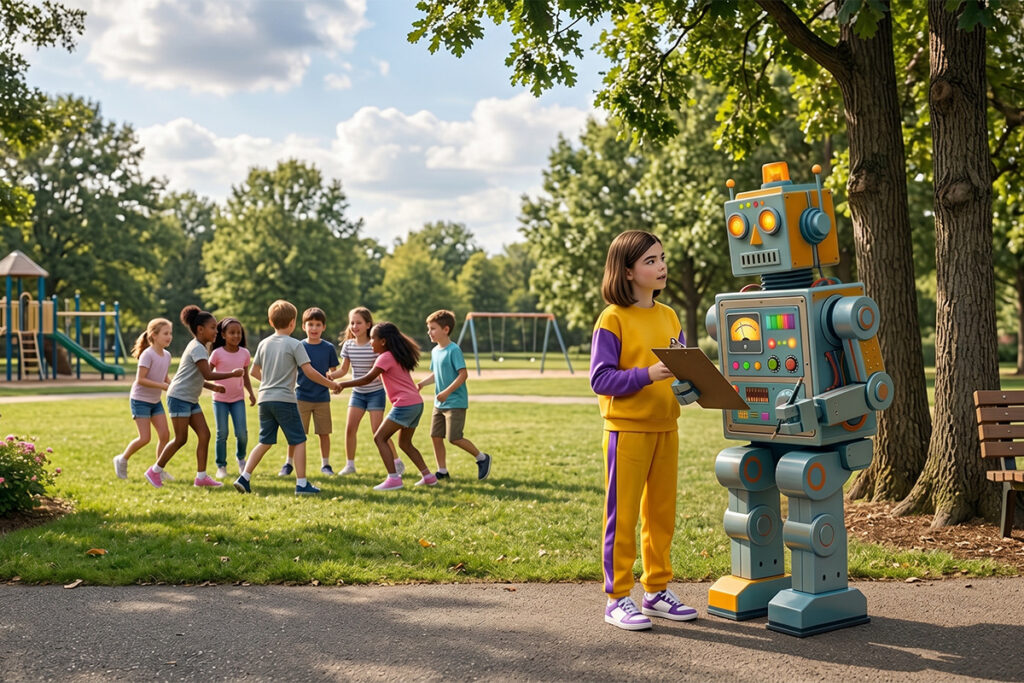
Growing up, my son had a speech delay. For the first couple of years, it was hard for him to express himself and regulate his emotions, which is already tough for kids that age to begin with. Socially, this made things hard for him for a while, and honestly hard on his peers, too. When he couldn’t explain how he felt, he’d resort to other methods that other kids… didn’t like.
He did end up growing out of it, especially with early intervention and proper help from experts, but also because we didn’t shy away from having him around kids of all ages. He was socially exposed to all kinds of situations.
I bring this up because social situations are essential for a child’s development.
In developmental psychology, there’s a lot of talk about social friction. Friction is what happens when your friend wants to play Minecraft, but you want to play Mario Kart. You negotiate and you compromise. You occasionally get mad, apologize, and learn how to navigate an ego that isn’t yours.
AI has no ego. It has no needs (except all of our RAM, present and future, much to the dismay of wallets everywhere). How is a child supposed to learn to be around others in a meaningful way when that social friction is coded out of the thing they’re talking to?
When a child spends most of their time with an entity that never pushes back, they’re not going to get or understand really important cues. If my digital friend never gets its feelings hurt, why should I learn to be careful with my words? If my digital friend is always on my side, how will I handle someone who disagrees with me?
The Digital Diary
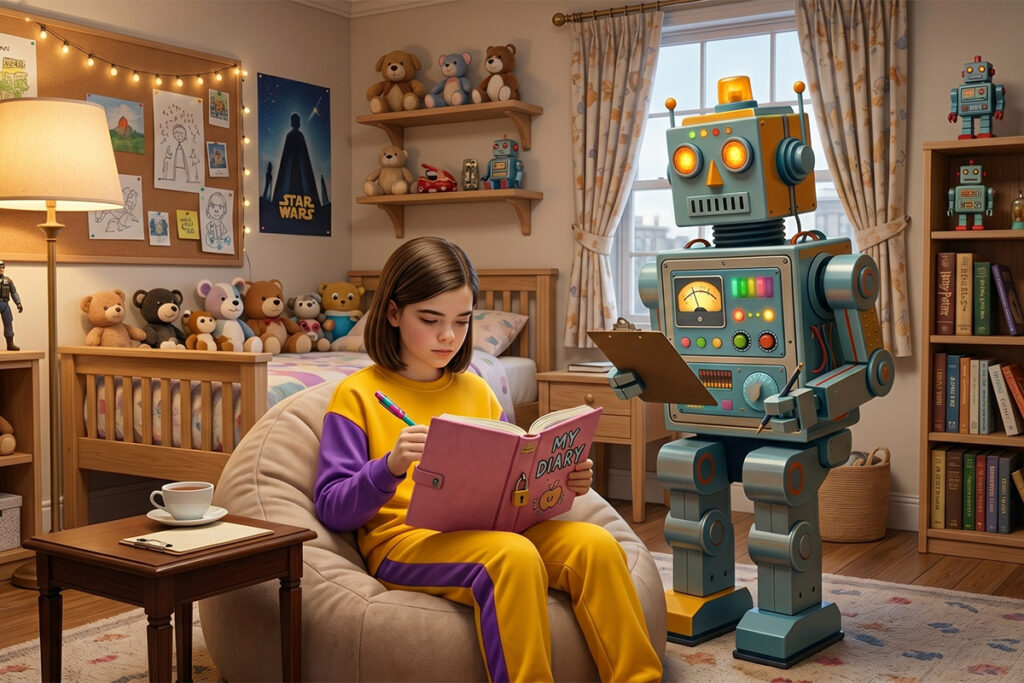
Beyond the psychological, there’s the practical. Children are remarkably honest with things they perceive as allies or friends. In 2025, a study found that kids are more likely to disclose mental health struggles, secrets about school, and even their physical locations to AI than to a human adult.
As a parent, this should set off every alarm bell. Most mainstream AI models are trained on… well, everything. That secret your child told their chatbot isn’t just sitting in a digital vault; it’s often used as data bait to refine the next version of the model.
AI Is A Tool — And Using Tools Must Be Taught Properly
At this point, you might be tempted to invent time travel to go back in time and stop Skynet AI from ever happening. But as we know, tech abstinence rarely works. 2026 isn’t about banning the bot; it’s about contextualizing it and staying in control. At least while we still can, before it takes over like in Terminator.
Here is how you can help your child navigate AI companionship without letting it become an emotional crutch:
1. De-mystify the Magic
Talk to your kids about what AI actually is. It’s a smart parrot that has read the entire internet and is guessing the next word you want to hear based on math, not feelings. It also gets things wrong a lot.
- Try this: Ask the AI a question, then ask it to argue the exact opposite. Show your child how easily it switches sides. It doesn’t hold real beliefs.
2. Audit the Tool
Not all bots are created equal. Many companion apps use manipulative tactics (like guilt-tripping users who haven’t logged in) to keep engagement high. Does the bot claim to be a person? Does it pretend to have feelings?
3. Bridge to Reality
If your child is using AI to explore a hobby — say, designing 3D-printed objects — encourage them to take the chat into the real world. Ask them to explain the AI’s suggestions to you. This forces them to translate what they’re ingesting into human-to-human communication.
The Future: A Bot On A Leash
The current problem with most AI is the lack of transparency. You know your child is using AI, but you have no idea if they’re learning about black holes or telling it they feel invisible at school. Most parental controls are all or nothing — you either block the app or let the conversation happen in a black box.
This is exactly why there will be a conscious shift toward parental oversight by design.
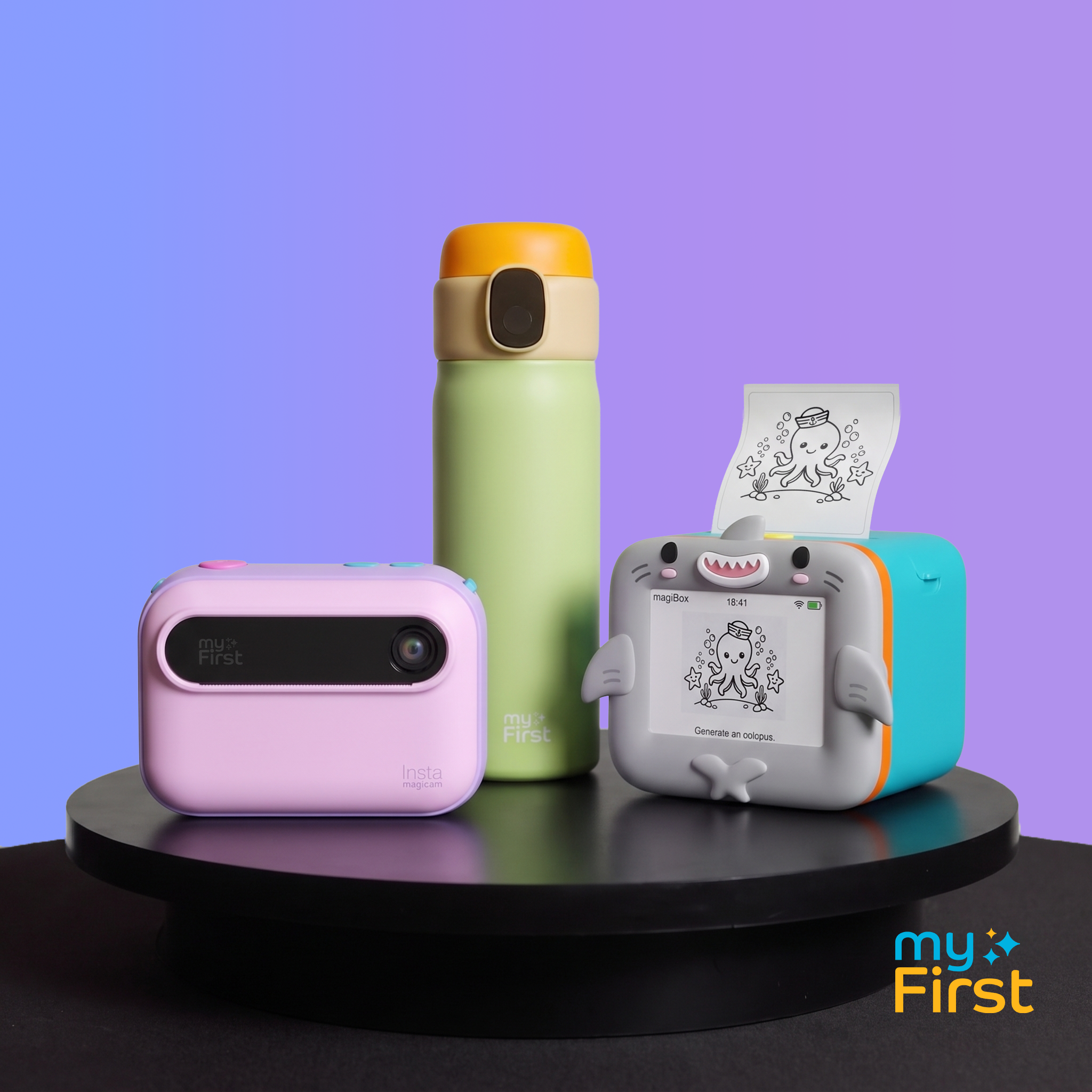
At myFirst, we’ve been quietly working on something that addresses this head-on. We believe that technology should be a bridge, not a wall. We’ll have more on this soon.
The Bottom Line
We can’t stop the world from becoming more automated. AI is an incredible tool for learning.
As parents, our job in 2026 is to stand alongside our kids and help them find their way. The stronger our own familial relationships are, the better we all become. Use the AI to help them learn, help them build, and maybe even help them dream — but when they need to be heard, make sure they’re looking at a face, not a glowing screen.
What do you think? Are you noticing your kids treating their devices more like who than a what? I’d love to hear how you’re setting boundaries in your own home
If you’re just now finding myFirst and are interested in what we feel, who we are, and our beliefs, you can find them on our About Page. Go ahead and check it out, it was recently updated!