

I’ll be the first to admit that my own kids are dangerously close to being addicted to technology. Neither of them has access to social media or YouTube for endless scrolling and the algorithms, but they both have their vices: my son (10) loves things like Disney+ on his iPad, and my daughter (14) won’t stop texting her friends.
Are we handling it perfectly? No. Is any parent out there? Probably no as well. But, it’s clear that circumstances vary from family to family and all lives — and kids — are different. Don’t blame the reasons why some parents choose to be more lax than others. Blame the companies for making things so addictive and so easy to rely on.
We’ve all seen it: the glazed-over look, the rhythmic twitch of a thumb, the heavy sigh when a device is finally banned for the day. Digital addiction and algorithmic doomscrolling are no longer unique to adults. The modern generation of children is the first to grow up with a personalized, AI-driven feed engineered to capture human attention from the moment a baby can hold things with their tiny, always-sticky hands.
For parents seeking to break this cycle, the first thought is, well, we’ll have none of that. At all. We’ll implement hard screen-time bans, locking devices in drawers, and completely hiding from the digital grid.
That’s just as bad, though. Kids need to learn how to wield tech, not shy away from it. They need a strong, healthy relationship with the things that will shape and dictate a lot of their lives socially, professionally, and just day-to-day. Absolute digital isolation rarely holds up in the long term.
Technology isn’t a fleeting trend, and banning it often turns screens into a forbidden, hyper-desirable and shiny object, leading to family friction and hidden usage. The real answer isn’t running away from technology, but making it a tool that can be controlled, not do the controlling.
The Psychology of the Doomscroll: Why Banning Fails
To break the algorithmic loop, we have to understand what makes it click. Social media and short-form video platforms operate on variable reward schedules. Every swipe provides a tiny, unpredictable hit of dopamine. It’s an internal ecosystem built entirely on passive consumption.
It’s like gambling, but the cost is your time and attention (and data), and your reward is another video.

When you abruptly cut off access, you aren’t just removing a screen; you’re creating a sudden deficit in stimulation. Kids don’t automatically look out the window and decide to build a treehouse or dig a big random hole in the yard; they go through withdrawal. So, we pivot. And yes, you can use tech to pivot.
I’m talking about guided exploration. The art of using structured, active technology to ground your kids (the good kind of grounding, not punishment), encourage real-world interaction and navigation, and creativity.
Examples
- Audio-First Entertainment: Shift from high-dopamine visual stimulation to rich spatial audio, interactive audiobooks, and outdoor podcasts that keep hands and feet free to move.
- Get Them Moving: You can even use apps for this — tracking fitness and movement. Rewarding goals. Have you ever tried geocaching? How about giving them a camera and a gentle push out the back door?
- Creation Over Consumption: Swap algorithmic feeds for tools that require physical capture. I’ve heard “photo walks” are a thing, though, despite my wife being a photographer, I don’t think I’ve ever been on one. Fire up a 3D printing pen or actual 3D printer and go nuts.
Passive vs. Active Is The Key
The core shift lies in moving kids away from passive consumption and toward active creation. If your child is glued to a screen, give them a tool that forces their eyes up. Instead of a smartphone filled with Zuck’s latest ploy for money and metrics, opt for dedicated, child-safe devices engineered for utility and creative independence.
Consider the impact of kid-friendly digital cameras or smartwatches built with real-world activity tracking. When you hand a child a camera, they break it immediately. Just kidding! They use it. Yeah, they might break it eventually, but until then, they’re going to be snappin’ pics of blurry dog butts and their own feet. They’re no longer passively absorbing an influencer’s life, which isn’t even real anyway.
In this mode, tech is a tool that magnifies the wonders of the physical world rather than obscuring them.
Gamifying the Real World
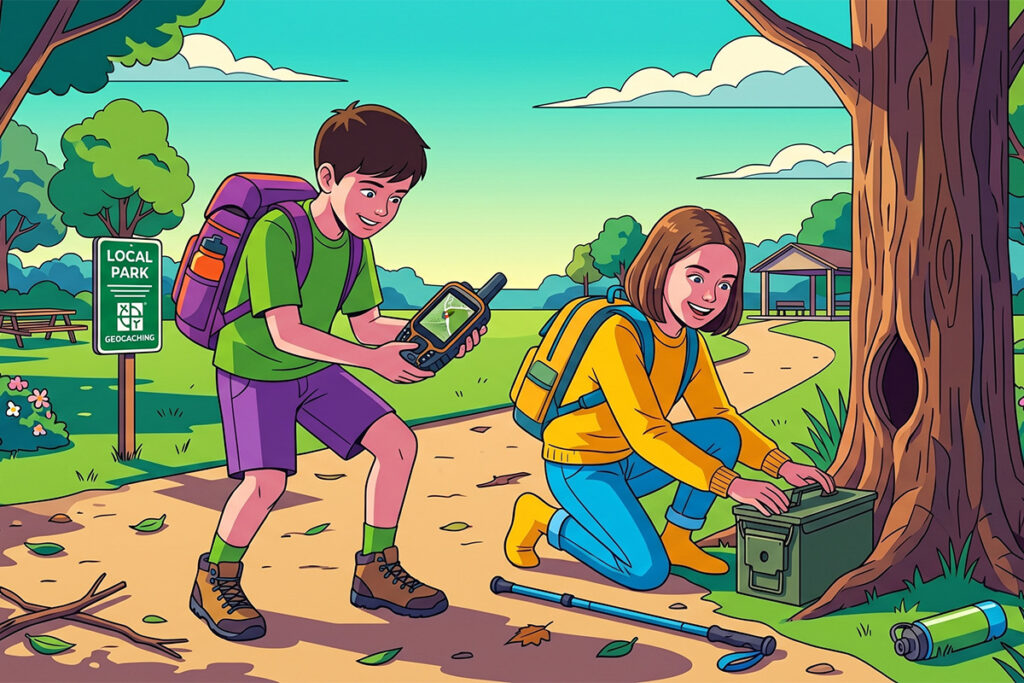
Another powerful strategy is using gamified tech to prompt physical movement. Geocaching is an excellent example of this balance. Remember when I mentioned that earlier, but didn’t define it? Surprise, here it is: this is the art of using GPS coordinates to track down small, real-world hidden treasures in local parks and trails. Usually, it’s just a tiny log (a piece of paper to write on, not like, the tree-kind) for you to sign that you found it before putting it back. Sometimes, though, it’s a cursed talisman of some sort that’s an entirely different form of adventure to then work through.
Similarly, step-counting adventures or augmented-reality nature-identification apps (such as those that identify plants, bird calls, constellations, or these weird new things called Pokémon) turn a casual hike into an interactive quest. This satisfies their natural desire for collection, progression, and achievement while anchoring their physical bodies in the outdoors.
Pokémon Go can get pretty addicting, I guess, but at least they’re out there moving, which is the point.
Give It A Shot
And you know what? I will too.
Moving from a high-dopamine digital habit to physical exploration requires consistent, gradual shifts. Start small by introducing tech-enabled outdoor activities once a week.
By shifting our perspective from “tech and the natural world don’t mix” to “tech can help us love the outdoors even more,” we teach our kids an invaluable lifelong skill: how to master their tools instead of being mastered by them.