Look, as a parent, I don’t love over-protection. Kids need to find their own path, face their own trials and tribulations, and learn from their mistakes. We just need to be there for them and help guide them, and explore life together. Balance is key. But, there is definitely a short list of things where some extra protection matters — and the future versions of them will be so glad you went the extra mile.
Audio is one of them.
As a parent, you’re likely balancing two competing goals: protecting your child’s sensitive, developing ears and keeping them happy with the audio quality of their games, shows, or music. Safety and quality don’t have to be mutually exclusive. In fact, if the audio quality is poor — lacking clarity or buried under background noise — kids are often instinctively tempted to crank the volume higher to compensate. That should be avoided at all costs.
Let’s talk about all the ways you can protect your kids’ hearing without banning headphones altogether. Choosing safe headphones for kids is only half the battle.
Beyond Volume Limits: A Multi-Layered Approach
The first layer of defense is hardware-based. Sometimes, despite sitting down and talking to them, kids don’t quite understand the dangers of loud volume. So, instead of watching their volume knobs like hawks and annoying them into oblivion, that’s where hardware limits come in.
In fact, all of the headphones we design here have them. Our in-ear CareBuds can’t go beyond 85dB, while our over-ear CareBuds Max also has limits that we split into Safe Mode and Travel Mode: 85dB and 94dB (to combat the noise from planes, for instance).
While volume-limiting hardware is a great first line of defense, it isn’t entirely a set-it-and-forget-it solution. In fact, there are still best practices you need to instill in your kids so they can enjoy their hearing into late life. To truly protect your child, consider these four pillars of listening safety:
1. Arms Length
Stand an arm’s length away from your child; if you can’t get their attention with a normal speaking voice while they are wearing their headphones, the volume is almost certainly too high.
2. Optimize the Fit
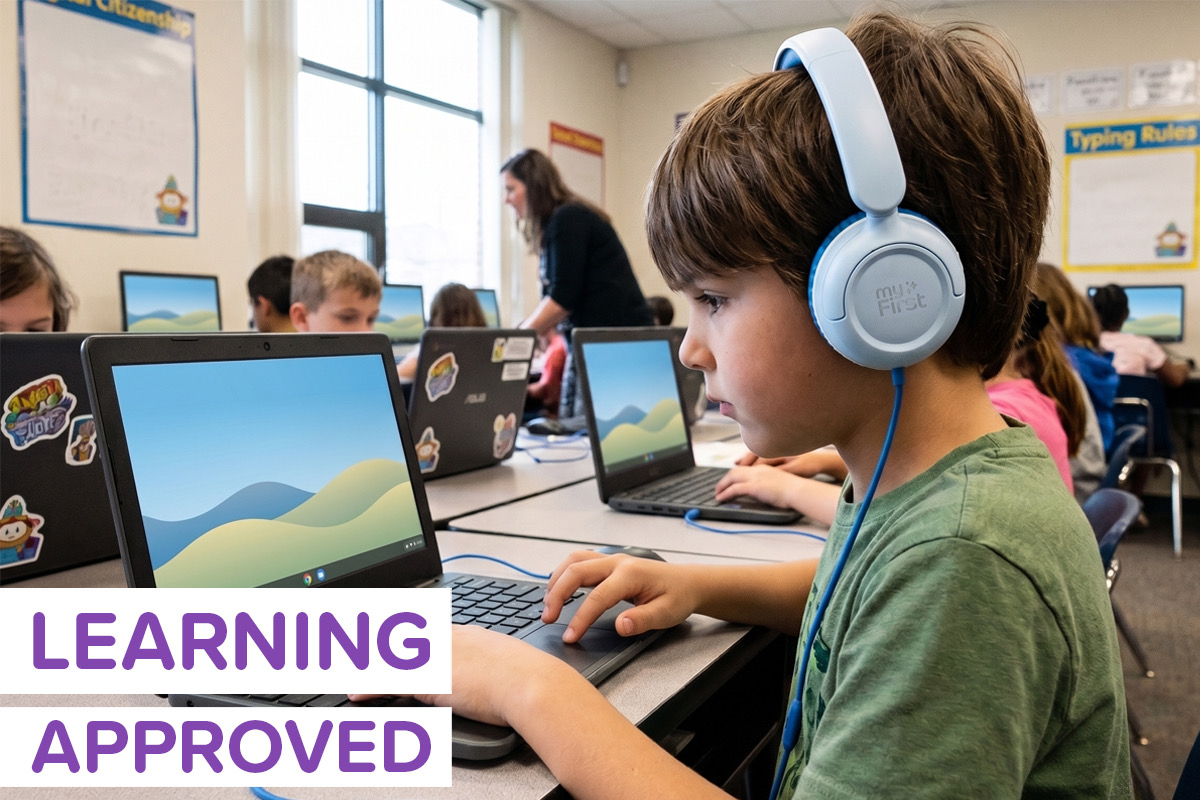
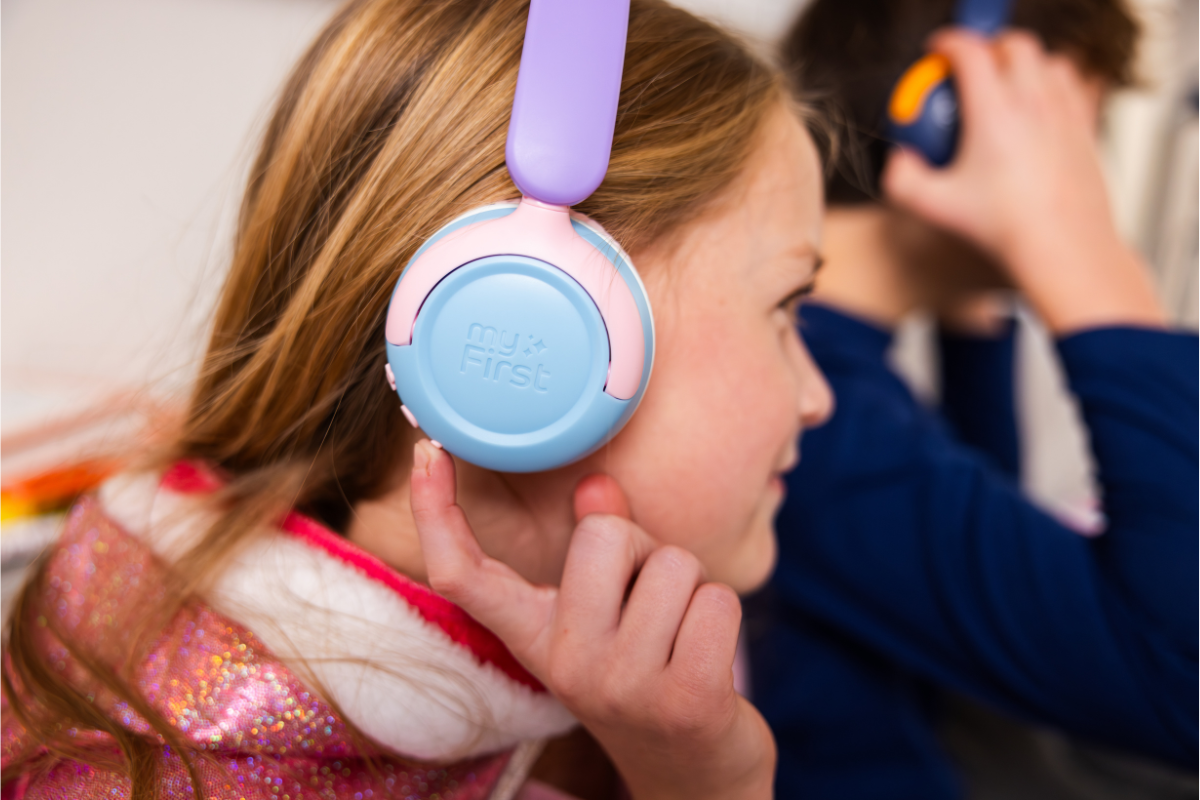
Sound leakage is a silent enemy. When headphones fit poorly, ambient noise from the environment can be such a buzzkill. Your child then turns up the volume to battle the rest of the world, which in some cases just isn’t a winning battle. Look for over-ear models designed specifically for smaller heads, which provide better passive isolation than earbuds. A proper seal keeps the sound in, meaning the volume can stay comfortably low.
3. Prioritize Active Noise Cancellation (ANC)
If you are worried about your child raising the volume to compete with loud environments like airplanes or public transit, consider investing in headphones with Active Noise Cancellation. By electronically neutralizing external background noise, ANC allows for lower, safer playback volumes while maintaining a rich, full sound profile that kids will actually want to listen to.
4. The 60/60 Rule
Safety is as much about duration as it is about decibels. Hence, the 60/60 rule: listen at no more than 60% of the maximum volume for no more than 60 minutes at a time. After an hour, encourage your child to take a five- to ten-minute break to let their inner-ear hair cells recover. Adventure Time can wait.
Why Quality Matters for Safety
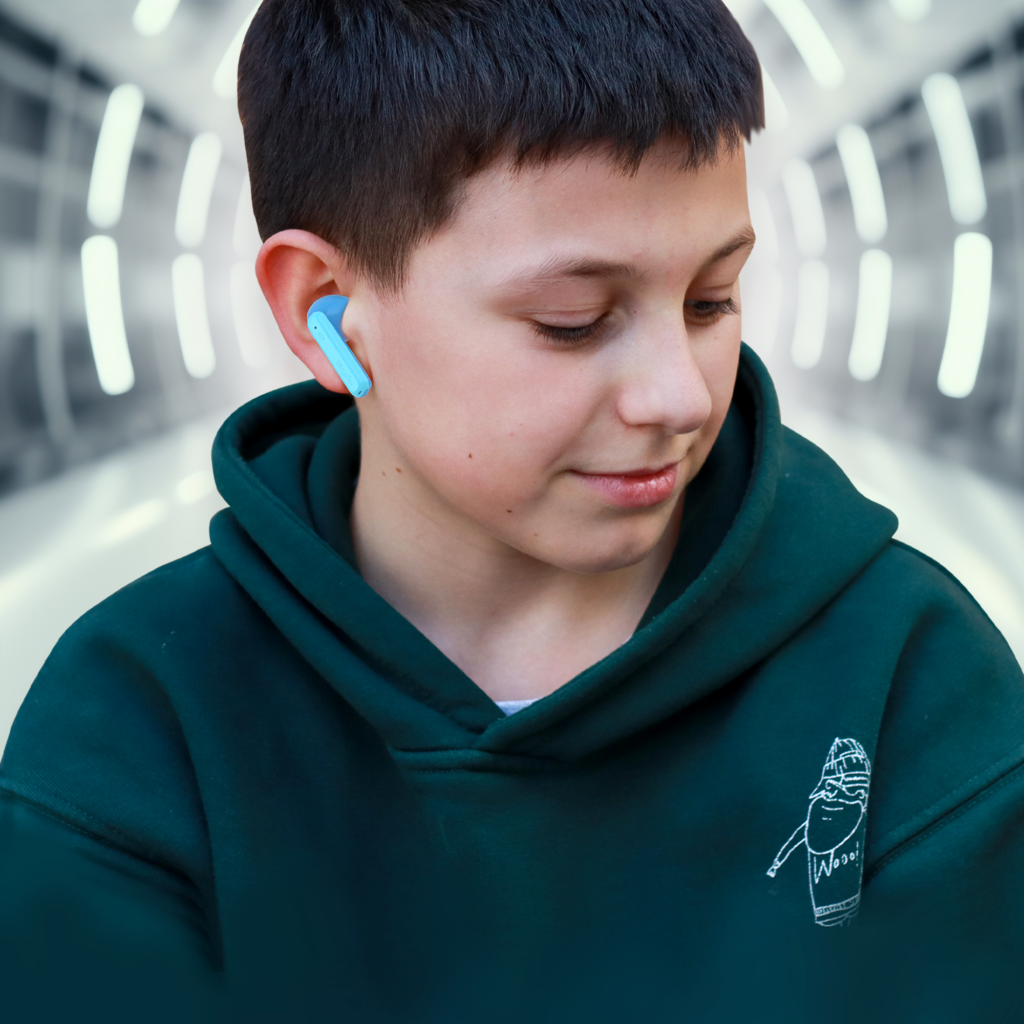
Nobody wants to listen to something that sounds like trash, and I’m not talking about the content itself — though that can sometimes feel like it matters too. No, I’m talking about sometimes when something doesn’t sound great, kids pump up the volume to hear the missing pieces better.
When you choose a pair of headphones with a balanced sound profile, you’re buying better auditory health. Headphones with clean, balanced drivers provide better sound separation, making it easier for a child to hear dialogue or nuances in music without having to push the volume into headbanging territory.
By treating headphone safety as a combination of hardware choice, fit, and mindful listening habits, you can protect your child’s hearing while ensuring they still get the full, vibrant experience of their favorite media.
Now check out our article on what matters most in choosing a camera for your tween!